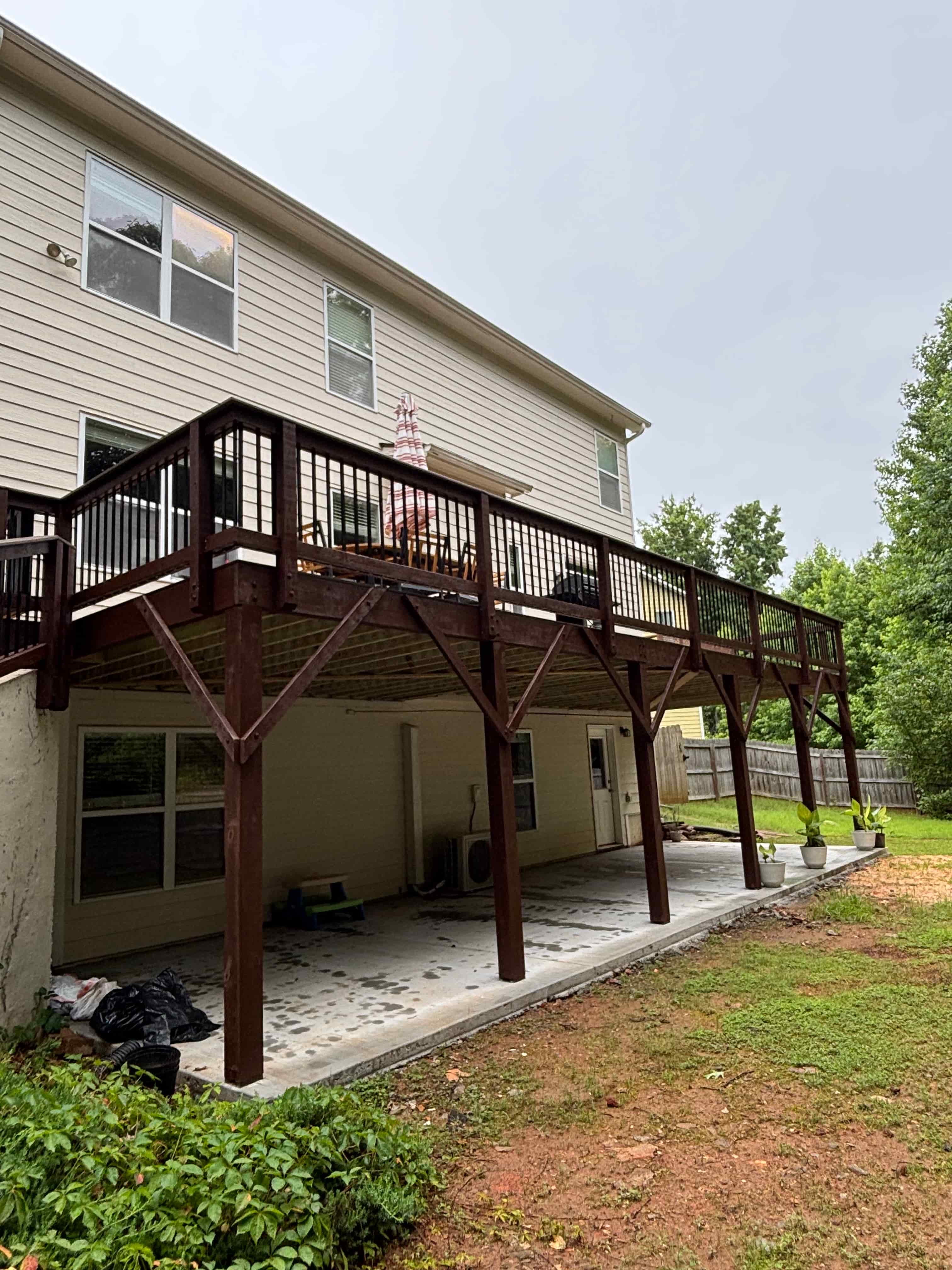
Every deck reaches a point where patching boards is just delaying the inevitable. Knowing the difference between a quick repair and a full deck replacement saves Atlanta homeowners money, and more importantly, keeps your family safe. If your deck is showing any of the following seven signs, it is time to stop repairing and start planning a replacement.
Why Repair vs. Replace Matters in Atlanta
Metro Atlanta's climate is hard on decks. High humidity, heavy summer storms, intense UV, and a long termite season all accelerate wood decay. A deck that might last 25 years in a dry climate often shows serious wear in 15 here. That is why a professional deck inspection is the best first step. Below are the seven signs that most reliably point to replacement rather than repair.
1. Soft, Spongy, or Rotting Boards
Press a screwdriver into any board that looks discolored or feels soft. If it sinks in more than a quarter inch, you have wood rot. A rotten deck board here and there can be swapped out, but widespread softness across joists and framing means the structure itself is failing. In Atlanta's humidity, rot spreads faster than most homeowners expect.
2. Wobbly or Cracked Support Posts
Your posts and footings carry the entire load of the deck. If posts move when you push on them, show cracks at the base, or sit on footings that have heaved or shifted, the deck is no longer safe. Post failure is one of the most common reasons a deck contractor recommends full replacement over repair.
3. A Damaged or Pulling Ledger Board
The ledger board attaches the deck to your house and is responsible for the majority of deck collapses nationwide. If you see rot, rust-stained fasteners, missing flashing, or any gap between the ledger and the house, this is a critical safety issue. A compromised ledger almost always signals it is time to replace.
4. Widespread Rot or Insect Damage
Georgia has serious termite and carpenter-bee pressure. If a deck inspection turns up insect tunneling or rot affecting more than 25 to 30 percent of the boards and framing, patching becomes a losing battle. At that point, replacement costs less over time than chasing repairs season after season.
5. Your Deck No Longer Meets Code
Decks built more than 15 to 20 years ago often have railings that are too low, balusters spaced too wide, undersized footings, or improper ledger attachment. If a deck inspection reveals multiple code violations, the cost of bringing everything up to current Cobb, Cherokee, and Fulton County code can equal or exceed a new build.
6. It Bounces, Sags, or Feels Unsafe
A solid deck should feel rock steady. If yours bounces when you walk, sags between supports, or sways when several people gather, the framing is undersized or deteriorating. These are structural warning signs no surface repair can fix.
7. Repairs Would Cost More Than Half of Replacement
The industry rule of thumb: when repair estimates climb past 50 percent of the cost of a new deck, replacement is the smarter investment. You get modern materials, a fresh warranty, an updated design, and years of worry-free use instead of pouring money into an aging structure.
A Rotten Deck Is a Safety Hazard
Deck failures cause thousands of injuries every year, and the most common culprits are rot, failed ledger boards, and undersized framing. If you notice several of these signs together, keep guests off the deck until a qualified deck contractor can inspect it.
What to Expect From a Deck Inspection
A thorough deck inspection covers the ledger connection, posts and footings, beams and joists, fasteners, and railings. A reputable deck contractor will show you exactly what they find and give you honest repair and replacement options, never pressure you toward the most expensive route. If you are weighing your choices, our complete deck repair vs. replacement guide breaks down the cost math in detail.
Choosing Materials for Your New Deck
If replacement is the answer, the next decision is material. Composite decking costs more upfront but eliminates staining and sealing, while pressure-treated wood is cheaper to install but demands ongoing maintenance. See how the two compare over two decades in our composite vs. pressure-treated 20-year cost breakdown.
Free Deck Inspection in Metro Atlanta
Not sure if your deck needs repair or replacement? We'll inspect it and give you a straight answer with clear options and pricing.
Schedule Your Inspection